Scaling Service Excellence: Redesigning Nedbank’s Consultant Experience Across Africa.
Role:
Product Designer
Project Overview
Redesigning Nedbank’s legacy platform to empower consultants, streamline operations, and scale across Africa.
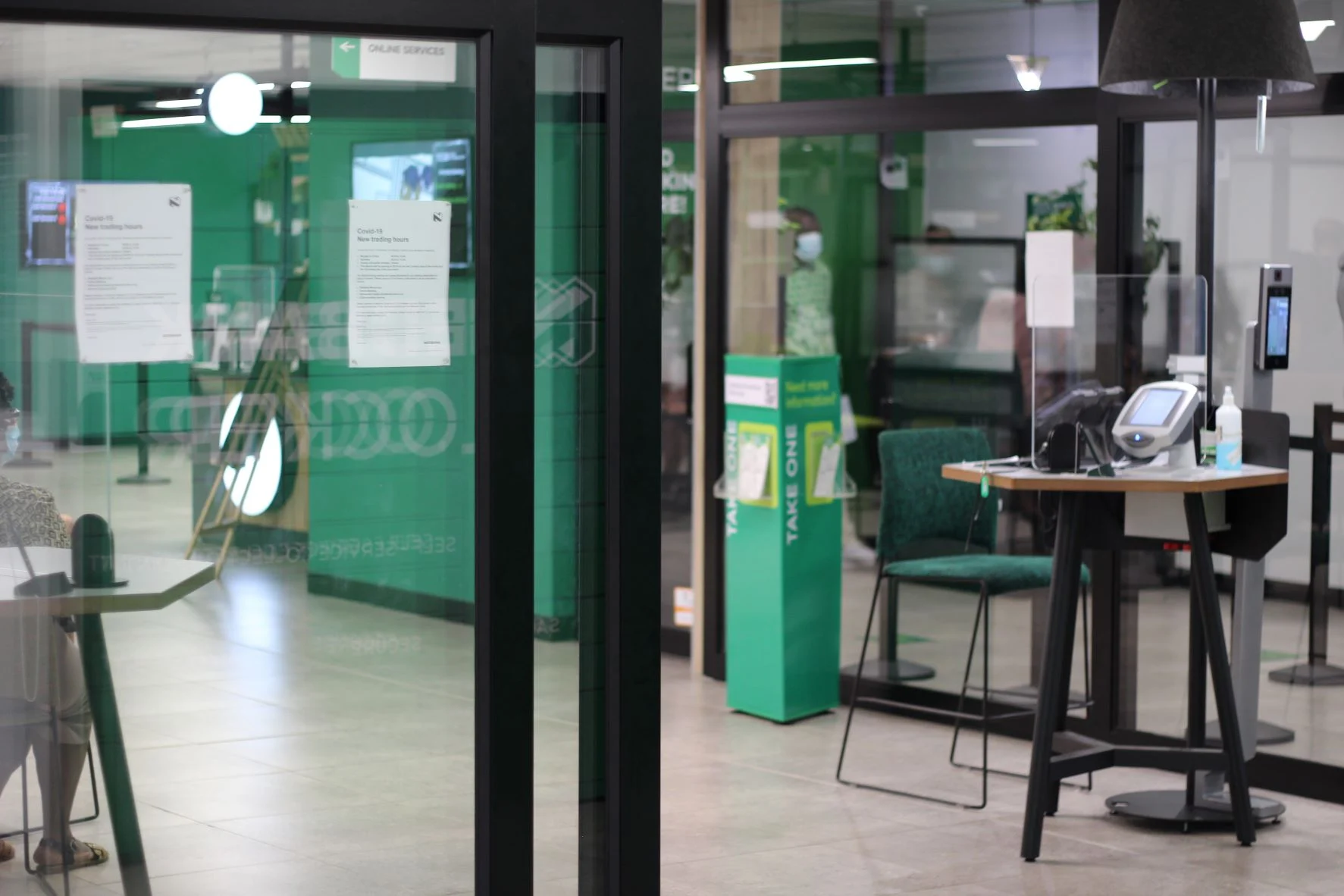
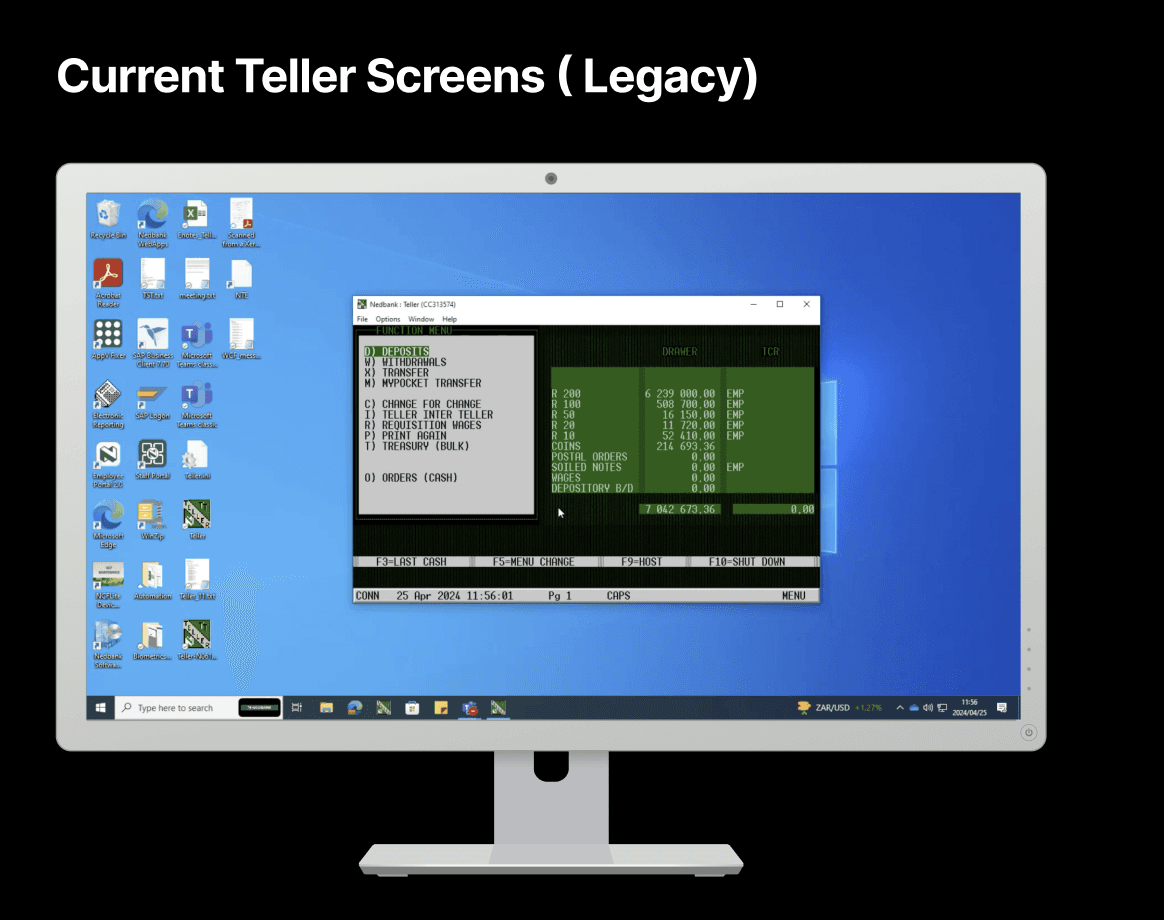
Nedbank aimed to modernise its legacy platform used by service consultants (tellers) to handle critical customer service tasks at branch level. The existing system was outdated, complex, and slowing down service delivery.
The goal was clear: redesign the platform to streamline workflows, improve usability, and enhance the overall branch experience.
While the initial rollout focused on South Africa, the vision was continental — with Eswatini selected as the first pilot for regional expansion.
My Role
I joined the initiative as a Product Designer, stepping into a fast-moving, cross-functional team with a big ambition: reimagine how Nedbank’s service consultants deliver customer experiences — today and across the continent.
From the start, I worked closely with business analysts, service designers, product owners, and developers, collaborating across disciplines to bridge user insight with technical feasibility.
Beyond crafting user flows and interfaces, I acted as a translator — turning complex consultant pain points into clear, actionable design decisions that aligned with both user needs and business strategy.
Throughout the journey, my focus stayed consistent: design with empathy, build for scale, and create an experience that empowered real people to deliver excellence, every day.
Key Challenges
Navigating Legacy Systems and Real-World Constraints
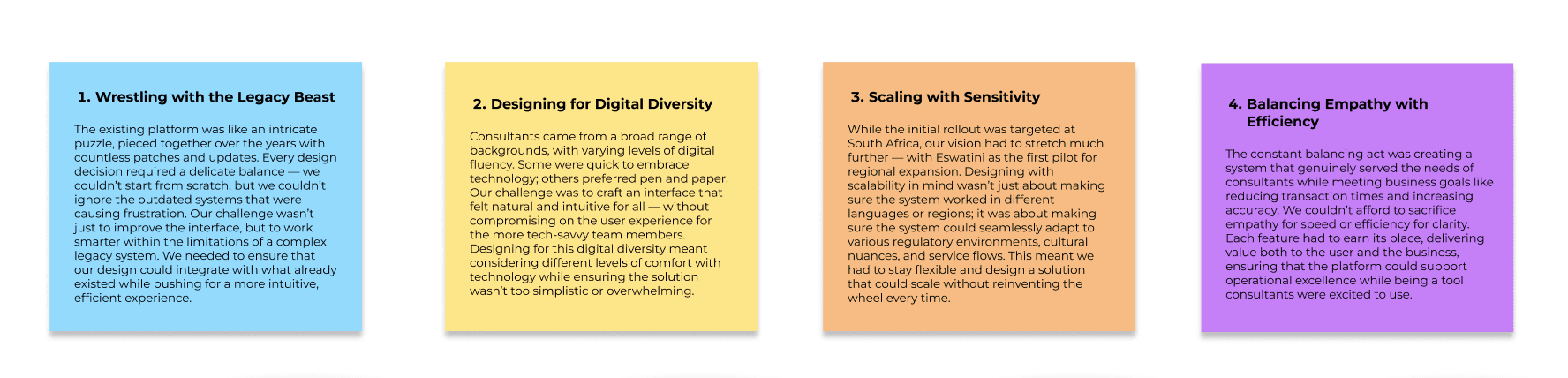
Designing for Nedbank’s service consultants wasn’t just about creating a cleaner interface—it was about navigating the realities of legacy systems, real-world constraints, and diverse user needs.
Design Process
Empathise: Uncovering the Real Challenges
We kicked off by diving into the world of service consultants. Through in-depth user interviews, job shadowing, and contextual inquiries, we were able to step into their shoes and see the daily struggles they faced. We didn't just want to understand what wasn't working — we needed to feel it. From fragmented workflows to clunky systems, we observed firsthand how these pain points impacted service delivery at the branch level.
Define: Turning Insights into Action
With a clear view of the issues, we brought our findings together, synthesising them into actionable problem statements. We focused on the most pressing challenges: reducing task complexity, minimising system switching, and making every task clearer. This phase wasn’t just about summarising user feedback; it was about framing the core problem in a way that allowed us to make bold, intentional design decisions.
Ideate: Building on Collective Ideas
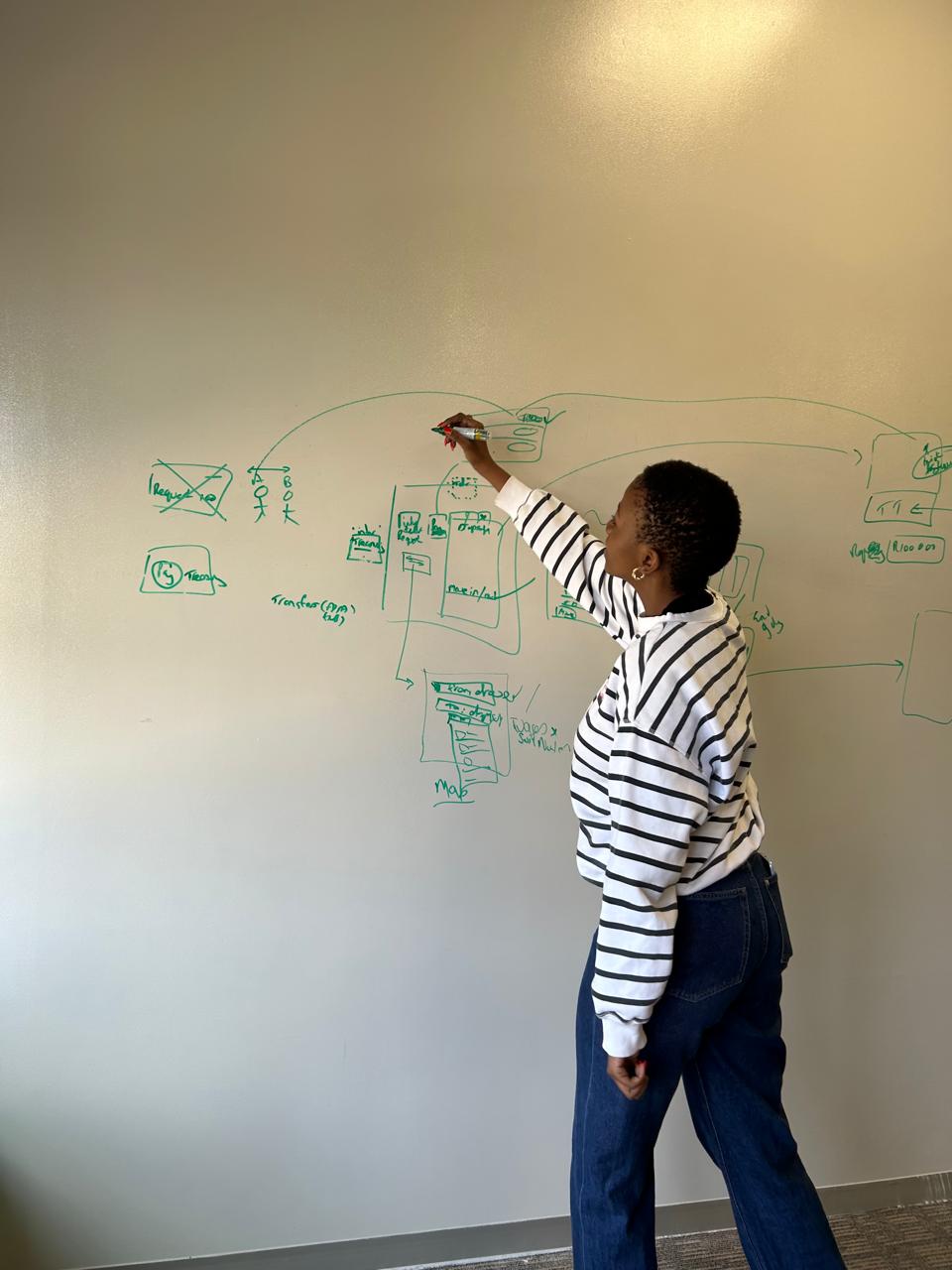
In the ideation phase, we came together as a cross-functional team, pulling in perspectives from all angles. Through collaborative workshops, we explored multiple concepts, sketching out potential solutions and weighing them against user value, business impact, and technical feasibility. We weren’t just designing for today; we were thinking about how these ideas could scale across the African continent. Prioritisation was key — ensuring we tackled the biggest pain points first while balancing the needs of both the user and the business.
Prototype: Bringing Concepts to Life
With our ideas in hand, we moved into prototyping, rapidly building from low- to high-fidelity versions. Each iteration was informed by stakeholder feedback and user testing, allowing us to refine the user interface and workflows continuously. This wasn’t a linear process; we were constantly tweaking and adjusting to make sure every design detail was aligned with our vision. The prototypes evolved from rough sketches into a polished digital experience — one that felt both intuitive and powerful.
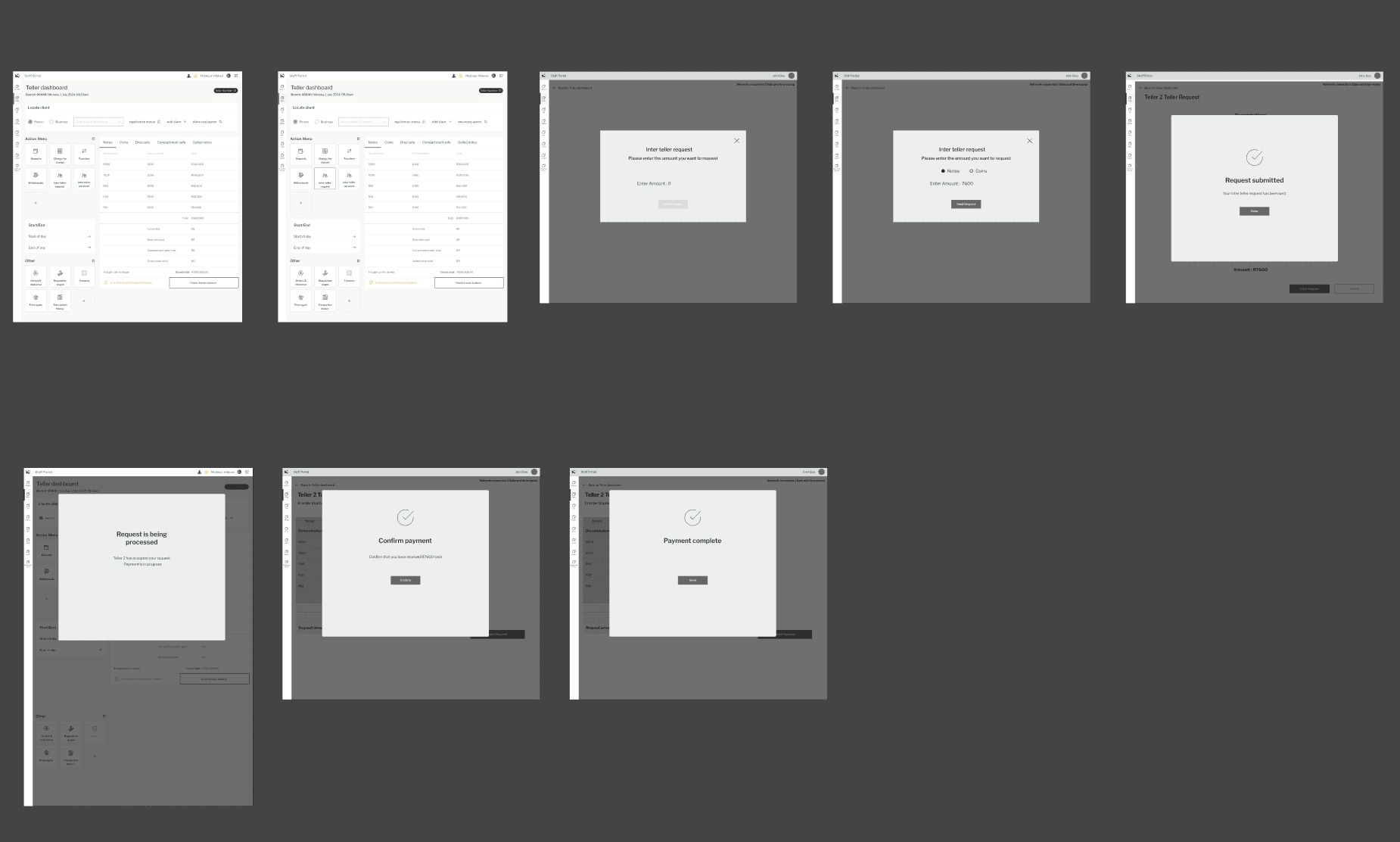
High-Fidelity Wireframes
Test: Validating with Real Users
The real test came when we put our prototypes in front of the consultants themselves. Through usability testing, we validated our design decisions, gathering direct feedback on navigation, interaction patterns, and task flows. The insights were invaluable, leading to critical refinements. It was through this iterative testing process that we truly ensured the system wasn’t just usable — it was built to make the consultants’ lives easier, day in and day out.
Outcomes
Transforming the Experience
Improved Task Efficiency
By streamlining workflows, we drastically reduced the number of clicks and the time required to complete critical tasks. The new system cut through the clutter, enabling consultants to move swiftly and efficiently through their daily responsibilities. This not only saved time but also minimised cognitive load, empowering consultants to focus more on meaningful customer interactions.
Higher User Satisfaction
During the pilot phase, consultants reported a significant boost in both confidence and satisfaction. The interface felt intuitive and easy to navigate, which helped them feel more in control and capable. This was more than just about the system functioning correctly — it was about making their jobs easier, faster, and less frustrating. The feedback was overwhelmingly positive, with many consultants expressing they felt more equipped to serve customers with efficiency and clarity.
Increased Adoption Potential
The modular, scalable design of the system ensured that it wasn’t just a one-off solution for South Africa — it was built with the future in mind. As the system grew, it could be easily adapted and scaled across different branches and regions, making it ready for regional expansion. This approach allowed us to seamlessly integrate local needs without redesigning the core framework, ensuring that the system could scale while maintaining consistency across countries.
Business Alignment
The redesigned platform didn’t just meet the needs of consultants; it directly supported Nedbank’s strategic goals of operational excellence and regional scalability. By improving branch efficiency, enabling staff to work more effectively, and positioning the bank for a smooth regional rollout, the solution became a key enabler of business growth. The new system aligned perfectly with the bank’s vision of streamlined operations and empowered employees, ensuring long-term success.
Reflection & Learnings
A Journey of Growth
This project reaffirmed the power of human-centred design in the face of complex enterprise challenges. Designing for service consultants — individuals who often work under significant pressure — reinforced the critical importance of clarity, simplicity, and empathy in every design decision. The system had to be intuitive, reducing mental fatigue and enabling consultants to perform their tasks confidently and efficiently. This project was a reminder that design isn’t just about making things look good — it’s about making them work for real people, in real-world conditions.
It also highlighted the immense value of cross-functional collaboration. Working closely with technical, business, and operational teams wasn’t just a necessary step — it was the key to making the solution truly implementable. Stakeholder buy-in wasn’t just about showing what could be built, but about ensuring that every feature aligned with the practical needs and constraints of those who would be using it. The solution needed to work on paper, but it also had to work in practice, ensuring smooth integration and scalability across the bank’s operations.
Most importantly, this project reinforced a core lesson in designing for scale: true scalability doesn’t start with the system itself — it starts with designing for real people first. We built a system that was adaptable and flexible for future growth, but at its core, it was always grounded in the needs, workflows, and experiences of the consultants who would use it day in and day out. By prioritising the human experience, we ensured that the design would stand the test of time and scale smoothly as the bank expanded its operations across regions.